7 things to know about VALORANT Champions Shanghai group stage
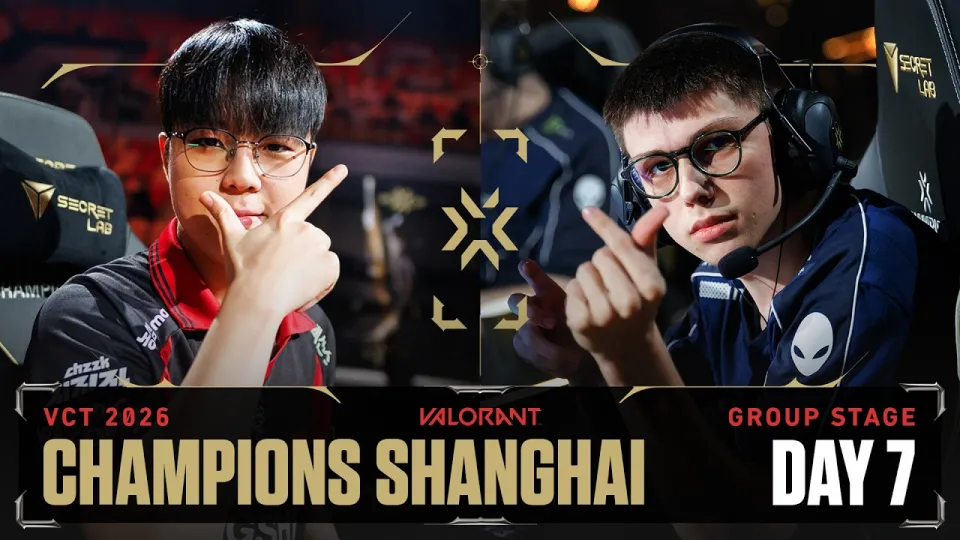
Video: VALORANT Champions Shanghai — Group Stage — Day 7
You can order the same kind of articles for your own video to boost it on YouTube and Google. Just message the Telegram bot @sat_sit_bot. The bot writes and publishes the articles itself (with your YouTube video embedded) on popular topical websites (no ads). Free trial — 50 articles.
· based on the channel VALORANT Champions Tour
VALORANT Champions Shanghai is the final VCT event of 2026, where sixteen teams from Americas, CN, EMEA and Pacific fight for the world title between 24 September and 18 October. The group stage decides which of those sixteen survive into the playoff bracket, and Day 7 is one of the last chances for teams on the bubble to fix their map pool and utility discipline. Official updates, brackets and announcements land on the VALORANT Esports X account, which is the fastest place to catch schedule changes and results.
What the VALORANT Champions Shanghai format actually asks of teams
The group stage is a survival test, not a showcase: sixteen invited teams are split into groups, and only the top finishers advance to the playoff bracket that decides the 2026 world champion. That structure means every map counts twice — a single lost eco round can decide a tiebreaker three days later. With the event window running from 24 September to 18 October, teams have roughly three weeks of stage time, so recovery between matches matters as much as preparation before them. The description of the Day 7 broadcast frames the tournament as a passing of the torch: familiar names, new contenders, and a generation of challengers who have already broken expectations twice at Masters this year.
1. Sixteen teams, four regions, one trophy
The Shanghai field is built from four regional pools — Americas, CN, EMEA and Pacific — and every one of them arrives with a different argument. Americas brings raw mechanical depth, EMEA brings structured default play, Pacific brings aggressive mid-round calling, and CN brings home crowd pressure plus a point to prove. Because only a handful of group slots lead to playoffs, cross-region upsets in the opening days reshape the entire bracket. The 2026 season already produced two different Masters champions, which is exactly why no group looks safe on paper.
2. Two Masters titles in one year changed the seeding logic
When two separate teams lift Masters trophies in the same season, the Champions group draw stops being a formality. Analysts and coaches can no longer treat any region's second seed as a free win, and prepared teams punish that assumption with set plays on Ascent and Haven. The Day 7 broadcast leans into this: the promo copy promises that a new era of challengers has arrived and that expectations have already been broken. For viewers, that translates into group matches that look lopsided on reputation but play out as genuine coin flips.
3. Day 7 sits at the point where group math gets brutal
By the seventh broadcast day of the group stage, most teams have played enough maps for tiebreakers to become real. That changes how coaches approach map vetoes: a team sitting at one win may ban its weakest map to protect round differential rather than chase a favorable matchup. It also changes in-game economy decisions. Saving on a 4v2 retake to keep rifles for the next round is a calculated bet on the standings, not just on the current map. This is the phase where disciplined teams separate from teams that only look good in scrims.
4. Tech pauses became the story of the broadcast
The most repeated complaint around the Day 7 stream was the volume of technical pauses interrupting maps. Long pauses hurt more than pacing: they break a team's momentum, force coaches to re-brief mid-map, and give the trailing side time to reset its economy plan. For viewers watching the VOD, the practical fix is to use the timestamp index in the comments and skip the dead air. For teams, the lesson is preparation — a squad that scripts its first three rounds after a pause usually keeps its structure, while improvised teams start losing 5v2s and eco rounds.
5. The CN debate is about round conversion, not aim
The sharpest criticism aimed at Chinese representatives in Shanghai was not about mechanics. It was about conversion: losing unlosable rounds, dropping 5v2 retakes, and defaulting to set strategies that fall apart once opponents adapt. That pattern shows up in utility usage — over-investing in one execute and leaving nothing for the retake — and in mid-round communication when the first plan collapses. The counterargument is equally real: CN teams earned their slots through regional play, and the gap at Champions is often one clean post-plant setup, not a talent gap. Group stage Day 7 is where that argument gets settled on the server.
6. Individual moments still decide close maps
Group stage VALORANT is decided by small mechanical wins: a Yoru clone that baits a rotation, a Sova recon that finds the last defender, a duelist who takes a 1v1 on the retake. Fan reactions to the Day 7 VOD focused on exactly these beats — a clone that briefly looked like a sixth teammate holding site, and veteran players turning unwinnable clutches. In a sixteen-team field where map differential decides who flies home, one highlight-level play per map is often the entire margin.
7. How to watch the group stage without wasting hours
Champions group stage broadcasts run for many hours, so treat the VOD as an archive rather than a live feed. Start with the timestamp comment pinned under the video to skip tech pauses, then watch only the maps involving teams still alive in the standings. If you want the competitive context first, follow the official channels for brackets and results before diving into matches: VALORANT Esports on X, Facebook, Instagram, TikTok and Twitch. Watching with the standings open turns a four-hour stream into a focused 40-minute session.
Useful links
- https://x.com/valorantesports
- https://www.facebook.com/ValorantEsports/
- https://www.instagram.com/valorantesports/
- https://www.tiktok.com/@valorantesports
- https://www.twitch.tv/valorant
Bottom line
The Shanghai group stage is the clearest picture yet of how deep the 2026 VALORANT field has become: sixteen teams, four regions, and no seeded favorite safe from a 5v2 collapse. Day 7 delivered the season's recurring themes in one broadcast — tight economy play, costly pauses, and CN squads still searching for answers when their set plays break. Use the standings and the timestamp index to watch it efficiently, and treat every eco round as a standings-changing event. The full Day 7 broadcast comes from the VALORANT Champions Tour channel, which is the source for this breakdown; for schedule changes and bracket updates, check the official VALORANT Esports X account before the next match day.
Key takeaways
- VALORANT Champions Shanghai runs from 24 September to 18 October and crowns the 2026 world champion.
- Sixteen teams from Americas, CN, EMEA and Pacific compete in the group stage.
- Two different Masters champions in 2026 set up an unusually open field in Shanghai.
- Group stage Day 7 is the seventh broadcast day of the opening phase, streamed by the VALORANT Champions Tour.
- Repeated tech pauses and CN teams' struggles against eco and retake rounds dominate viewer discussion.
Questions & answers
How many teams play in the VALORANT Champions Shanghai group stage?
Sixteen teams qualify from four regions: Americas, CN, EMEA and Pacific. They compete in the group stage for a limited number of playoff slots, and the survivors move into the bracket that decides the 2026 world champion.
Why were there so many technical pauses on Day 7?
The Day 7 broadcast was repeatedly interrupted by tech pauses, which viewers flagged as the main pacing problem of the stream. Pauses reset momentum and give coaches time to re-brief, so they can shift the outcome of a close map. Use the timestamp index in the comments to skip them in the VOD.
Are CN teams really weaker than other regions at Champions?
The criticism aimed at Chinese teams in Shanghai focused on round conversion — lost eco rounds and failed 5v2 retakes — rather than raw aim. That is a fixable structural issue with utility usage and mid-round calling, and the group stage is where it gets tested.
Where can I follow results and schedule updates?
The official VALORANT Esports channels post brackets, results and schedule changes, with X (https://x.com/valorantesports) usually the fastest. Full match VODs, including the Day 7 group stage broadcast, appear on the VALORANT Champions Tour YouTube channel.
Source: VALORANT Champions Shanghai — Group Stage — Day 7 · Markdown version